
Task 1:
Post war period:

- Landslide Labour victory of July 1945
- There was a dramatic rise in prosperity and living standards, as well as radical initiatives in health and welfare provision and in education
- Britain’s desperate economic situation forced the government to continue with rationing and controls throughout the late-1940s
- The 1950s was a time of full employment, more people than ever bought their own home and ran a car
- Rationing was phased out by 1954 and the end of the decade saw the development of the ‘package holiday’ which allowed many people to travel abroad for the first time
- And labour-saving devices from electric irons to washing machines transformed lives
- Between 1947 and 1965 Britain divested herself of her Empire
- The 1950s witnessed the rise of the ‘teenager’, a process encouraged by the fashion and popular music industries
- Young people had more freedom and more money to spend than ever before
Feminist Ideologies:
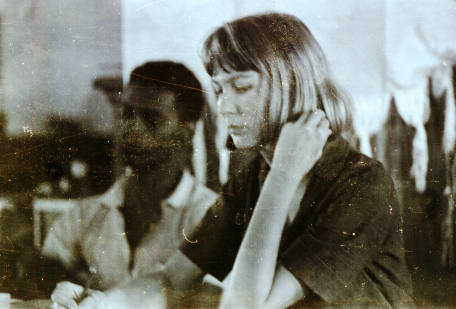
- During the 1960s, influenced and inspired by the Civil Rights Movement, women of all ages began to fight to secure a stronger role in American society.
- As members of groups like the National Organization for Women (NOW) asserted their rights and strove for equality for themselves and others, they upended many accepted norms and set groundbreaking social and legal changes in motion.
- Title VII is the section of the Civil Rights Act of 1964 that prohibited discrimination in employment on the basis of gender
- In 1960, the US Food and Drug Administration approved the birth control pill, freeing women from the restrictions of pregnancy and childbearing
- The pill was the first medicine ever intended to be taken by people who were not sick
- By the early 1960s, 30 states had made it a criminal offense to sell contraceptive devices
Baby boomers:

- Baby boomer is a term used to describe a person who was born between 1946 and 1964
- Baby boomers were named for an uptick in the post-WWII birth rate
- Bill Clinton was the first baby boomer to serve as president. George W. Bush, Barack Obama and President Donald Trump are also baby boomers.
Consumer culture:

- In some ways mass marketing and consumerism brought about a material conformity.
- • The 1950s was a decade of economic boom.
- Jobs in the service sector also grew. As the economy grew, labour was relatively sanguine; workers seldom challenged employers as wages and benefits grew.
- In order for prosperity to continue, Americans had to spend money on necessities and luxuries
- Credit and credit cards were easier to obtain than ever before
- Debt rose from $5.7 million in 1945 to $56.1 billion in 1960
- The sale of televisions boomed in the 1950s and televisions and the consumer society went hand in hand.
- Class differences declined in the 1950s
- The baby boom helped heighten pressure on men and women to conform to traditional gender roles
- Work place inequalities, such as pay, were the norm and were to be expected.
- The consumer society of the 1950s, television networks, movie studios, record labels, and comic book companies catered to a new group of consumers: teenagers.
1c) Butlins 1960s advert: https://www.youtube.com/watch?v=zlufJHSMtVk (8:43-9:10)
The Butlins advert has a wide range of historical iconography, linking it to the time period. The advert starts with a blank screen, with the words “Butlin’s the Big Holiday”, the nature of the product is instantly introduced. The text is paired with a non-diegetic voice over given by a man in RP, this suggests that a male voice is needed to sell the quality of the product. Although women’s liberation was starting in the 60’s, the world was still very patriarchal and male centred. Van Zoonens theory enforces the idea that women are seen a secondary in the media and that men are the dominant figures in society. The notion is further carried in the advert where we see women taking their children to the rides and generally only see a male when he is in the stereotypical family with a wife and child. The insinuation is then that women look after the children, while the men are at work.
The main selling point of the holiday is the “no extra cost” USP that would appeal to middle working class families who are perhaps still recovering from the impacts of the war, or possibly being swept away with multiple extravagant offers from various companies during the consumer boom, leaving them out of pocket. To enforce the “no extra cost” the narrator repeats the word “free”, used in the phrase “care free” and “freedom”, this subliminal messaging would promote the USP of Butlin’s and allow it to stand out as price competitive in comparison to other holiday companies.
The 60’s, as a time period, is easily established with the historical outfits, short female hairstyles and the use of a black and white camera. Short hair was typical of women during the war, as they had to tie back their hair when working jobs in factories when all the men were sent away. Although the 60’s is after the war, the women still kept their hairstyles as a sign of resilience and a silent reminder of the power they once held.
The Butlin’s advert acts as a demonstrative action for the get away destination, images of children playing in theme parks and swimming having connotations of joy that would appeal to mothers desiring to give their children a little bit more happiness. For children who may be watching the television too, the may see other children their age and wish to be in a similar situation. Therefore the hard sell technique is very persuasive and is likely to get lots of interest.
Butlin’s 2020: https://www.youtube.com/watch?v=ANIBpl2YHPs
The modern Butlin’s advert seems a lot more polished. With the use of fast cuts and wide angles they manage to capture more of the adventure on offer. Whereas the 60’s advert was aiming to get customers in general, they seem to be catering their audience to appealing to children more, not the parents. The main time we see adults in the advert is when a child wakes them up, or is jeering at them on the sidelines. This suggests that consumers have changed over time, and it is no longer adults who decide on the holidays but the wants of the children who convince their parents to go. Children are more likely to watch the advert on the television and want to go as they are the main focus.
Another difference between the two adverts is the representation of the children. The 60’s advert showed slim white children with their mothers and possibly fathers, but the new advert shows different races and shapes of children with differing family backgrounds, one child coming to the resort with his grandmother. The changing family dynamics and social norms are consequently shown.
There is still a voice over, this time by the children, diegetically. It creates an intense narrative and an immersive experience for the children shown, also a sense of immediacy as the children are talking on screen not just a voice in the distance, this is intensified with the use of close ups. The diegetic sounds also included are: sounds of the water slides, breathing and screaming, these give another dimension to the actors and liven up the atmosphere of Butlin’s.
The company still use a hard sell, demonstrative action approach. I think this is suitable as they are selling an experience, and the customers need to see if it is worth it before they invest in going. Butlin’s no longer seem to sell themselves as an overtly “no extra costs” company, instead the quality and magnitude of events available seems to be the selling point, furthermore showing the contextual differences, as we now tend to have a larger disposable income and prefer to spend our money on a memorable experience rather than spend a little and get little returns too.
-read examiner report
 Nadia's Media